
Play Your First Notes in Tune on the Violin
Overview
Welcome to Day 4 of Start Fiddling Now. Each lesson in this series builds one small skill at a time so you can make steady progress without feeling overwhelmed.
Today you’ll focus on your left hand. You’ll learn a relaxed left-hand hold, place your first three fingers on the D string, and practice playing in tune using a simple four-note scale and drone tuning.
Learn
Practice Plan
- Watch the mini lesson.
- Try the fingering exercises for 5–10 minutes.
- Stop when it feels comfortable.
If this feels comfortable, you’re good to move on.
A little practice goes further than powering through the whole series at once.
Let’s Practice…
Set Up the Left Hand
Before playing any notes, take a moment to shape the left hand.
Make a gentle fist. Then allow the fingers to open slightly so they stay curved and relaxed. This is the same preparation we used for the bow hand.
Bring your left hand up near the scroll. Let your chin and shoulder hold most of the violin. The left hand should stay relaxed so the fingers can move freely.
If this feels tricky, support the violin briefly with your right hand while you reset the left-hand shape.
Tap the Fingers First
Before making sound, lightly tap the fingers on the D string.
Touch the string and release. Don’t press yet.
Let the fingers drop straight down like little pistons. This helps the hand learn the motion without tension.
Try tapping each finger slowly for a few seconds.
Place the First Finger (D1)
Now place your first finger about an inch from the nut on the D string.
Pluck the string with your right hand.
This note is E. It’s written as D1, meaning first finger on the D string.
Use very light pressure. Less than you think you need. Avoid squeezing the neck.
Try this simple pattern:
D0–0–1–1
Pause and shake out your hand if things start to feel tight.
Tune the Note with a Drone
You can use an electronic tuner to check the pitch at first. It can help you see whether the note is sharp or flat.
But the goal is to train your ear.
Try playing D1 while listening to an E drone. When the note blends smoothly with the drone, you’ve found the right spot.
E Drone
The tuner shows you where the note is.
The drone helps you feel when it’s in tune.
Add Second and Third Fingers
Now add the second finger. This note is F# (written D2).
Pluck it slowly and check the pitch with an F# drone.
Next add the third finger. This note is G (written D3).
Keep the fingers relaxed. Light pressure works better than pressing hard.
Pause occasionally and shake out your hands and shoulders.
Practice the Four-Note Scale
Now play the four notes on the D string like a small scale.
Open string, first finger, second finger, third finger.
Try one pluck per note:
D0–1–2–3
Play slowly and listen carefully.
Take a moment to enjoy the sound.
Two Plucks per Note
Next try two plucks on each note as you go up the scale.
D0–0–1–1–2–2–3–3
Then walk back down:
D3–3–2–2–1–1–0–0
Repeat the pattern once or twice. Keep the sound relaxed and steady.
Add the Tucka Rhythm
Now add a rhythm you already know.
The tucka rhythm goes: Short–short–short–short–long–long
Use that rhythm on each note of the scale as you go up and down the string.
This is a great way to combine rhythm practice with left-hand fingering.
Go Deeper
Play-along tracks
Practice with looping audio so you can relax, repeat, and let your body learn.
🎧 Looping audio to play along with
🎼 Simple tabs & visual rhythm guides
🎻 Exercises that build groove without overthinking
🔒 Included with the free trial
You’ll practice short bow strokes with looping tracks—so you can repeat gently, stay relaxed, and let coordination build naturally.
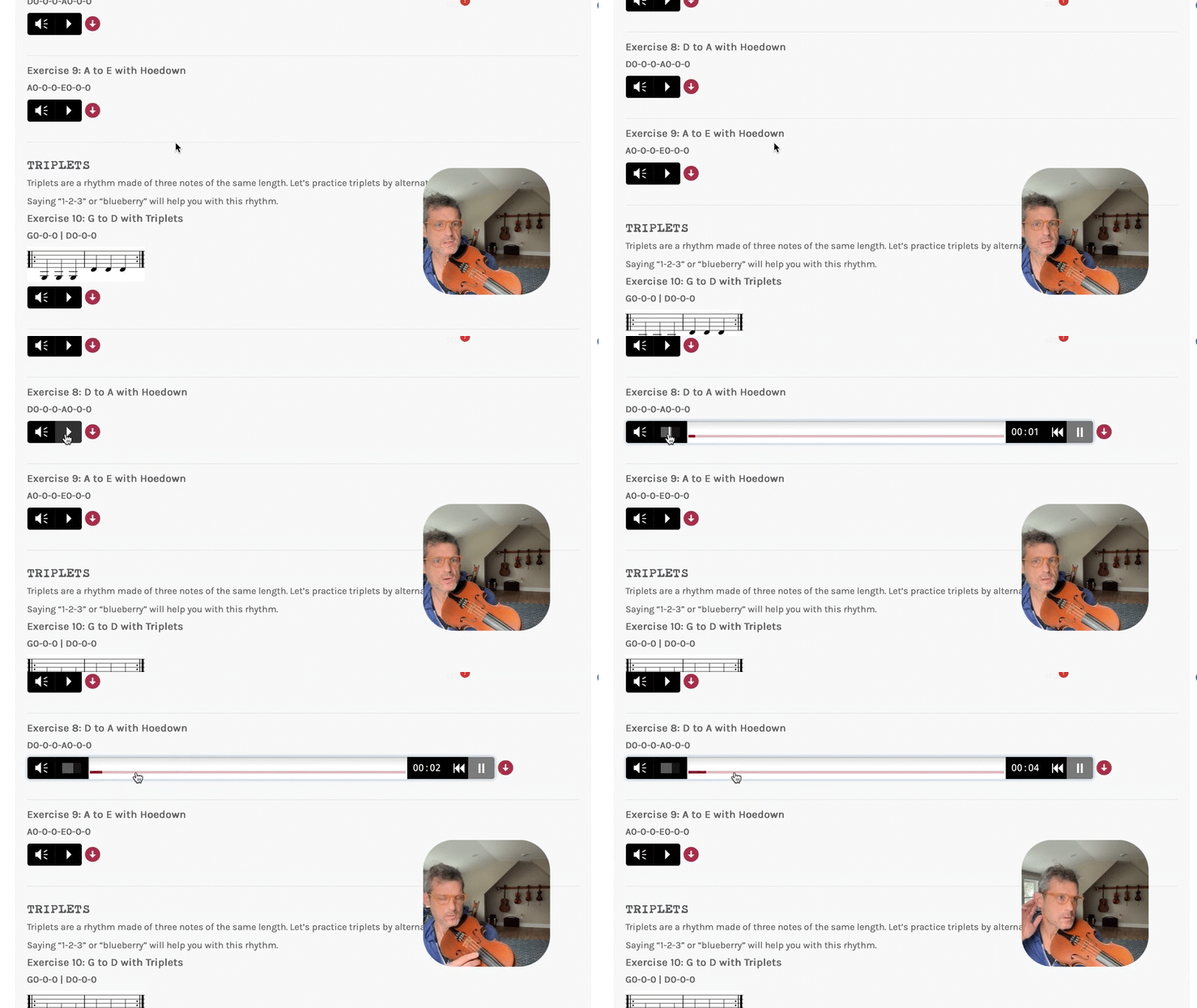
Extra Help
Included with the Free Trial
-
🎧 Looping play-along audio tracks
-
🎼 Simple tabs & rhythm guides
-
🎥 Extra videos on:
-
📸 Photo guides for posture and setup
-
🛠 Tips
-
🧠 Common questions answered
-
🔁 Practice ideas
Common Questions
Why are we plucking instead of bowing?
Because two hands are enough of a party already, plucking lets you focus on your left hand without bow drama.
Can I do this with a drone track?
Yes! Drones are your tuning training wheels—except they don’t fall off and they hum in perfect pitch.
Do I need to do every exercise right now?
Nope. Pick 1–3 and make them sound good. Quality plucking is better than quantity plucking (your dog agrees).
Reflection
What helped you place your fingers more accurately today?
When you played with a drone, what did you notice about how the notes blended?
Which version of the scale felt easiest: single plucks, two plucks, or the tucka rhythm?
Ready for the next step?
In the next lesson, you’ll use these same finger positions to play your first fiddle tune.
You’re closer than you think. Keep going.
Go to Day 5: Learn a Song By Ear >>
Back to 7-Day Overview >>
Leave a Reply
You must be logged in to post a comment.
I agree Anne-Marie. It’s surprising how little pressure you need to make a clean note. I also like how slower going makes faster progress. I’m starting to appreciate the huge gap between “knowing” how to do something and actually being able to do it.
Playing along with the drone tracks for the many repetitions helps to release the heavy pressure on the strings which I do each time that I start an exercise. By the end of the reps I can now relax enough to release the left finger pressure. Thanks for all the bits and bites used in this teaching technique.