Hold the Violin & Make Your First Sounds
Overview
Welcome to Day 1 of Start Fiddling Now! Today you’ll start getting comfortable with the violin and making your first real sounds.
You’ll learn how to hold the violin comfortably, pluck the strings and say their names, and get your fiddle roughly in tune. You don’t need perfection. You just need a relaxed start.
Go at your own pace. Some people move through this in a week. Others take longer. Comfort matters more than speed. 🎻
Learn
Practice Plan
- Watch the mini lesson
- Try the plucking and rhythm exercises for 5–10 minutes
- Stop when it feels comfortable
If this feels comfortable, you’re good to move on.
A little practice goes further than powering through the whole series at once.
Let’s Practice…
Holding the violin

For now, we’re using a beginner hold that:
- keeps the violin supported by your chin and shoulder
- lets your left hand relax
- frees you up to focus on plucking and rhythm
A shoulder rest can help a lot at first.
Later on, you’ll be able to hold the violin without using your left hand at all.
You’ll explore other holds (classical, old-time, guitar position) later.
Today is about comfort and confidence.
Plucking (pizzicato)
Plucking is when you use your right index finger to make sound.
It’s one of the best ways to:
- start making music quickly
- learn string names
- practice rhythm without worrying about the bow
Place your right thumb on the fingerboard and use your index finger to pluck the strings.

It’s fun to make sounds and little patterns as you figure out the technique.

Plucking isn’t just for beginners. You’ll use it throughout your fiddling life.
String names
Let’s learn the string names. This will help you learn the basics. It also allows you to communicate with other musicians (you’ll be at that point sooner than you think if you play every day 📈).
From left to right, the strings are:
G – D – A – E

A simple and powerful habit:
- say the string name
- then pluck it

Rhythm: the Tucka pattern
Let’s learn a simple rhythm called Tucka:
Short–Short–Short–Short–Long–Long
Saying “tucka tucka tuck ah” will help you with this rhythm. Or say “Mississippi hot dog.” And if you are a vegan you can say, “Marinated tofu.” 🤪
G to D with Tucka
G0-0-0-0-0-0 | D0-0-0-0-0-0

Say the note name each time you switch strings.
Once you can do this with flow, repeat the exercise on the other string pairs:
D to A with Tucka
D0-0-0-0-0-0 | A0-0-0-0-0-0

A to E with Tucka
A0-0-0-0-0-0 | E0-0-0-0-0-0

See the Go Deeper tab below for more play-along tracks and supplementary learning content.
Tuning the Violin
Tuning the fiddle is a necessary step.
For now:
- pluck the strings in guitar position to tune
- use a tuner app or clip-on tuner
- start with the G string and move left to right
If a string is way out of tune, use the peg.
If it’s close, use the fine tuner.
You’ll get better at tuning just by doing it often.
See the ‘Extra help tab below for a deeper dive into tuning the violin.
Bile ’em Cabbage Down Duet
You’ll hear me start by playing your part which is a second or beginner fiddle part.
After the first repetition, you’ll continue to play the second fiddle part, while I will switch to the melody.
You’ll learn the melody later in lesson four of this module!
First Quarter: D0-0-0-0-G0-0
Second Quarter: D0-0-0-0-A0-0
Third Quarter: D0-0-0-0-G0-0
Fourth Quarter: D0-0-A0-0-D0-0
Note: this entire tune follows the tucka pattern.
When to Move On
If this feels comfortable, you’re good to move on.
A little practice goes further than powering through the whole series.
Go Deeper
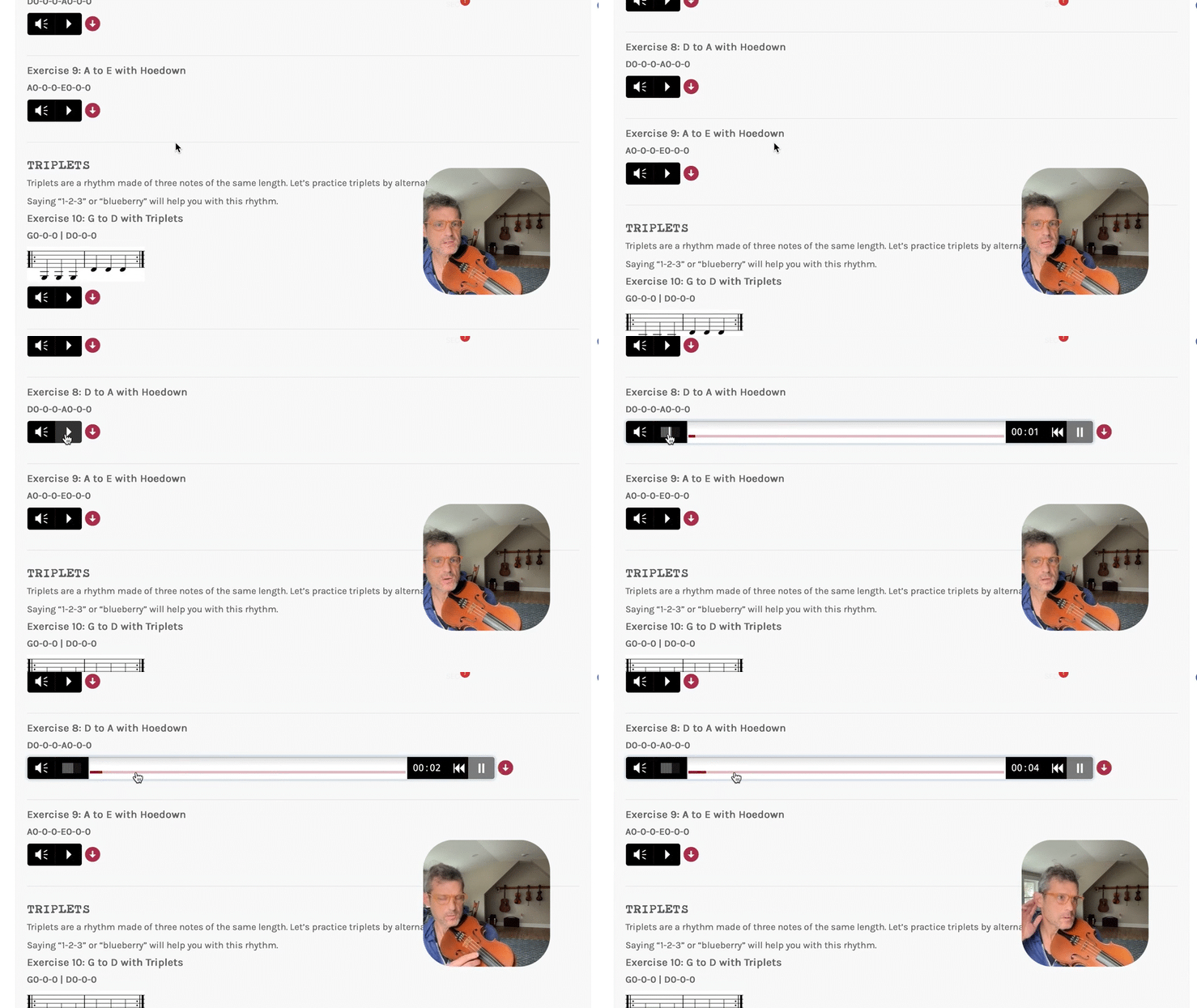
Play-along tracks
Practice with looping audio so you can relax, repeat, and let your body learn.
🎧 Looping audio to play along with
🎼 Simple tabs & visual rhythm guides
🎻 Exercises that build groove without overthinking
🔒 Included with the free trial
You’ll practice short bow strokes with looping tracks—so you can repeat gently, stay relaxed, and let coordination build naturally.
Extra Help
Included with the Free Trial
-
🎧 Looping play-along audio tracks
-
🎼 Simple tabs & rhythm guides
-
🎻 Plucking rhythm exercises (Tucka, Hoedown, Triplets)
-
🎥 Extra videos on:
-
How to hold the violin
-
Plucking technique (pizzicato)
-
Tuning the fiddle step-by-step
-
-
📸 Photo guides for posture and setup
-
🛠 Tips for using a shoulder rest comfortably
-
🧠 Common questions answered (tuning, posture, awkward feelings)
-
🔁 Practice ideas to help skills stick without overthinking
Common questions
• Do I have to use the Classical Hold if I just want to play old-time tunes?
Nope! The Old-Time Hold works great for that. But the Classical Hold gives you more options down the road, so it’s worth trying out.
• How do I know if my hold is good?
If you can hold the fiddle without using your right hand—and without clenching everything like you’re holding a sneeze—you’re in good shape.
• Is it OK if I feel awkward at first?
100%. Every fiddler starts with a wobbly instrument and a nervous left shoulder. It gets better with play.
Reflection
What felt easier today than before?
Ready for the next step?
In the next lesson, you’ll start using the bow and make your first bowed sounds.
Go to Day 2: Play Your First Bowed Notes on the Violin >>
Back to 7-Day Overview >>
Leave a Reply
You must be logged in to post a comment.
Day one! hurts a bit on the collarbone and shoulder. Is this normal, something I’ll get used to? Sort of like the way your fingers get callusus as part of the guitar playng process.
I’m looking forward to revisiting my violin after a loooong time away.
I see that others have made similar comments, but I still want to say: your teaching style is excellent. It’s part of what makes me look forward to the lessons.
Just lovin’ this teaching style!
I have been enjoying the lessons and the videos. Your teaching style is just what I’ve been looking for.